
Reliable Conveyor Belt Systems in Ontario for Industrial Material Handling


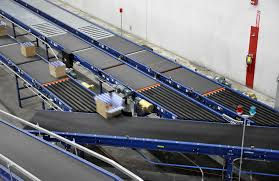


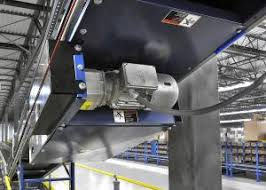
A belt conveyor with a slider bed is a type of material handling equipment designed to transport goods using a continuous belt that slides over a smooth, flat surface (the slider bed). This design is particularly suitable for applications where the conveyance of products with consistent support and minimal movement is crucial. Wecon Systems provides conveyor belt solutions in Ontario tailored to meet specific operational requirements. Our systems are designed with careful consideration of load capacity, belt material, and environmental conditions to ensure reliable performance.
Contact us to learn more about conveyor belt solutions, system supply, and configuration services for industrial material handling.
Key Features of Belt Conveyor Slider Beds
Some of the key features include:
Continuous belt movement: The belt provides a continuous and smooth surface for transporting products.
Slider bed support: The belt slides over a flat surface, providing consistent support across its length.
Versatility: Suitable for handling a wide range of product types and sizes.
Customizable: Available in various widths, lengths, speeds and belt materials to meet specific application needs.
Low maintenance: Simple design with fewer moving parts reduces maintenance requirements.
Components of Belt Conveyor Slider Beds
Key components of belt conveyor slider beds include:
Conveyor belt: A continuous loop of material (usually rubber or synthetic material) that moves over the slider bed.
Slider bed: A flat, smooth surface over which the conveyor belt slides. Typically made of metal (e.g., steel or aluminium) or a low-friction material.
Drive mechanism: Includes a motor, drive pulley, and belt tensioning system to move the belt.
End pulleys: Located at each end of the conveyor, these pulleys support and guide the belt.
Frame: The structural component that supports the entire conveyor system, including the belt and slider bed.
Adjustable legs: Allow the conveyor height to be adjusted to meet specific operational requirements.
Working Principles
Conveyor slider beds function by enabling the conveyor belt to slide over a stationary surface, which is driven by a motorized pulley system:
Product loading: Products are placed on the moving belt at the loading point.
Belt movement: The drive mechanism powers the belt, causing it to move over the slider bed.
Product transport: As the belt moves, products are carried along the conveyor path.
Product unloading: Products are removed from the belt at the designated unloading point.
Benefits of Working with the Pros
Choosing a professional conveyor provider ensures your system is built for long-term performance and reliability. Working with experienced technicians offers advantages such as:
Proper configuration: Systems are designed to match load requirements, belt type, and operating conditions.
Correct installation: Components are aligned and installed to prevent wear and maintain smooth belt movement.
Quality materials: Professionals use durable, application-appropriate components that extend system lifespan.
Safety and compliance: Installations follow industry safety standards and engineering best practices.
Reach out to us for reliable conveyor belt solutions in Ontario. Since 1997, we have accumulated almost two decades of industry experience with our operations based in Mississauga.
Types of Belt Conveyor Slider Beds
Common conveyor belt types include:
Standard slider bed conveyor: A basic design suitable for general material handling applications.
Incline/decline slider bed conveyor: Configured to move products up or down between different heights or levels.
Heavy-duty slider bed conveyor: Built to handle heavier loads with reinforced frames and belts.
Low-profile slider bed conveyor: Designed with a lower frame height for applications with space constraints.
Applications of Belt Conveyor Slider Beds
Common applications of belt conveyor slider beds include:
Warehousing and distribution: Used for transporting boxes, packages, and other items within warehouses and distribution centres.
Manufacturing: Moves products between different stages of the production process.
Packaging: Transports items through various packaging stages, including sorting, labelling, and sealing.
Retail and E-commerce: Handles product movement in retail fulfillment centres and e-commerce distribution facilities.
Food and beverage: Used for transporting packaged food and beverage items in processing and packaging plants.
Benefits of Belt Conveyor Slider Beds
Slider beds for belt conveyors provide consistent belt support, simplified construction, and suitability for applications with moderate load requirements. The benefits include:
Smooth and consistent transport: Provides stable support for products, reducing the risk of jostling or damage.
Versatility: Suitable for a wide range of products and applications.
Cost-effective: Lower initial and operational costs compared to more complex conveyor systems.
Easy to maintain: Simple design with minimal moving parts reduces maintenance needs and costs.
Adaptability: Can be customized to fit specific operational requirements, including different lengths, widths, and belt materials.
Belt conveyor slider beds are a reliable, versatile, and cost-effective solution for material handling needs across various industries. Their ability to provide smooth and consistent product transport makes them ideal for applications ranging from warehousing and manufacturing to order fulfilment and retail. By integrating belt conveyor slider beds into their operations, businesses can enhance productivity, reduce manual handling, and ensure the efficient movement of goods.
Frequently Asked Questions
Below are some commonly asked questions regarding belt conveyor slider beds and their applications:
What Is a Belt Conveyor Slider Bed, and How Does It Differ from Roller Conveyors?
A belt conveyor slider bed uses a stationary flat surface to support the belt, whereas roller conveyors use multiple rotating rollers to carry materials. Slider beds provide smoother and quieter movement for evenly distributed loads.
How Do You Determine the Appropriate Load Capacity for a Slider Bed Conveyor?
Load capacity is calculated based on material weight, belt width, speed, and belt tension. Structural supports and frame rigidity are also factored in to ensure safe and consistent operation.
Which Industries Commonly Use Belt Conveyor Slider Beds?
Slider beds are used in food processing, manufacturing, warehousing, and recycling operations. They are ideal where stable material transport and low-maintenance operation are required.
Need Conveyor Belt Systems in Ontario for Your Facility?
Wecon Systems offers conveyor belt solutions designed for industrial material handling requirements across multiple sectors.